TDI Overhead-Environment Training
TDI Cavern Diver Course
Build the buoyancy, guideline, gas-planning and communication foundations required to explore within the daylight zone with discipline.
Start a ConversationBuild a Disciplined Foundation for Overhead Diving
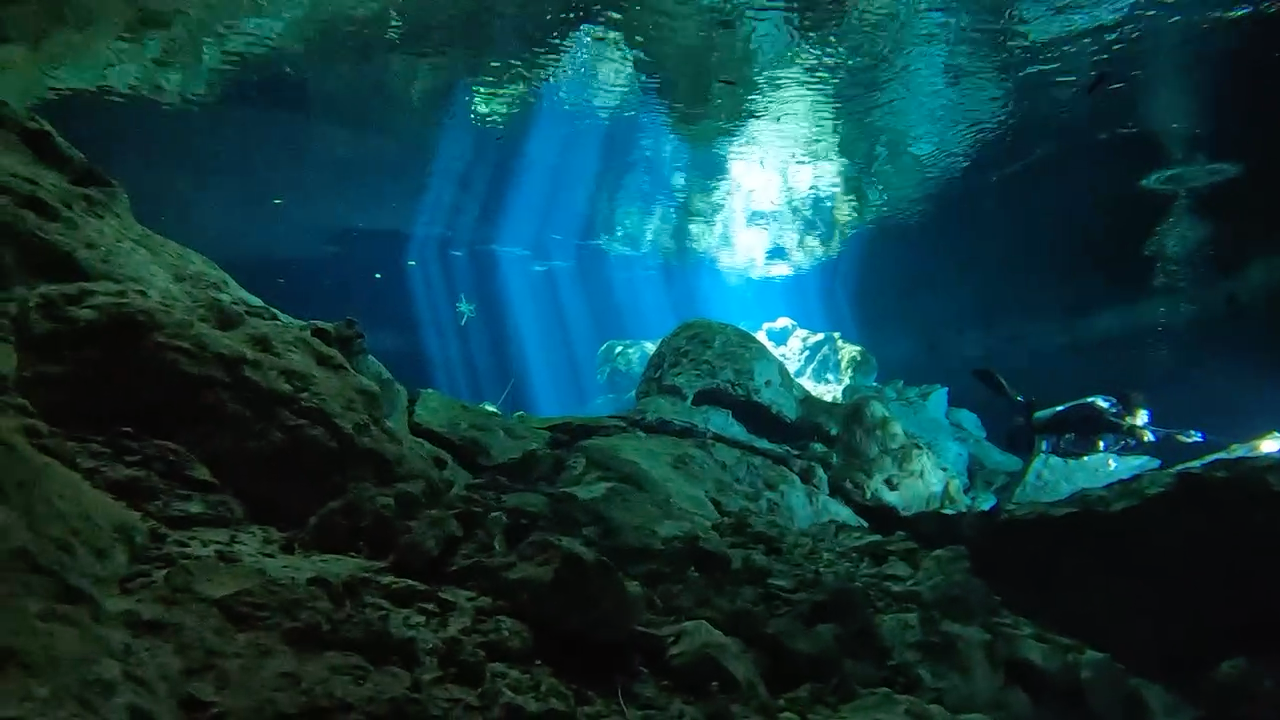
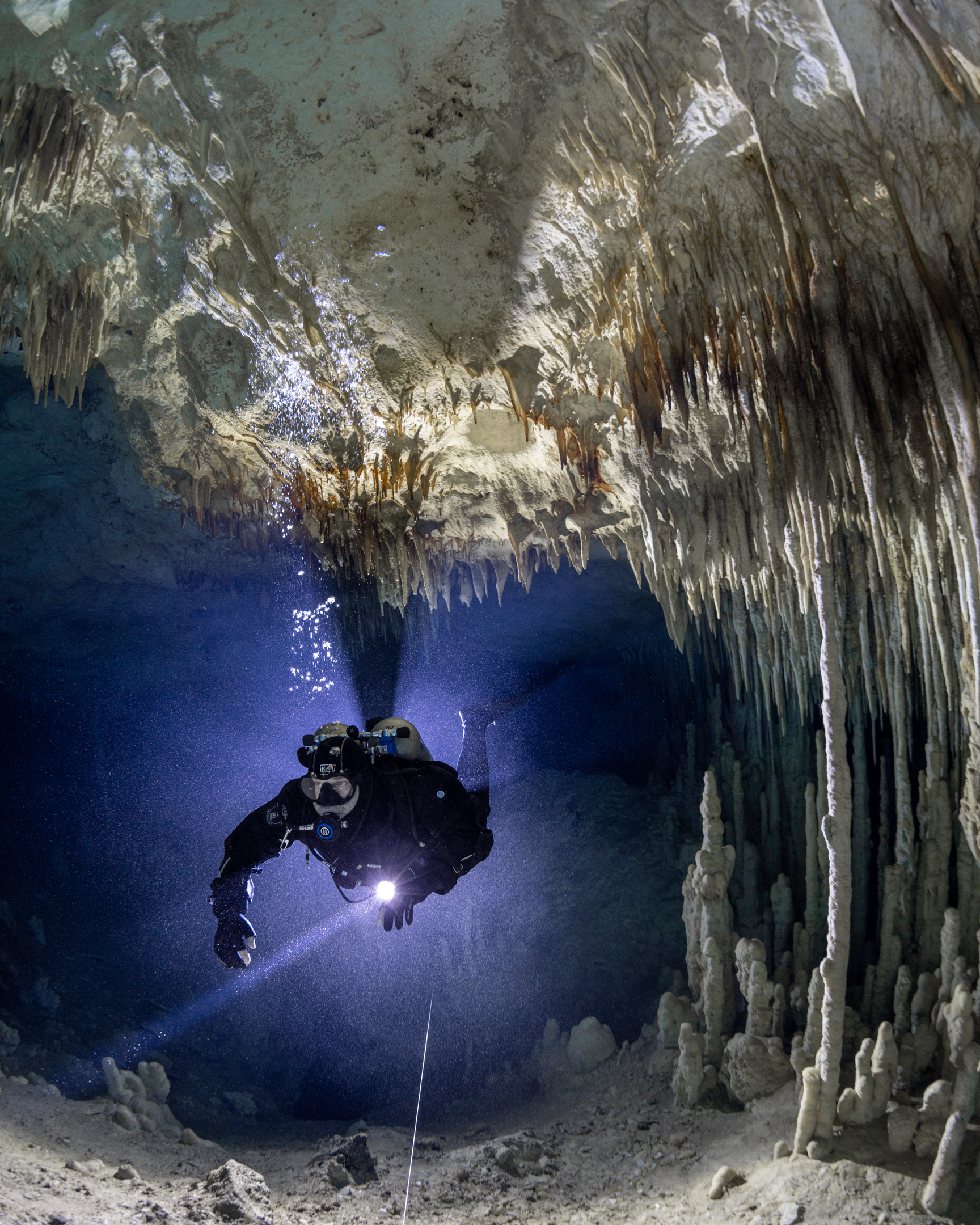
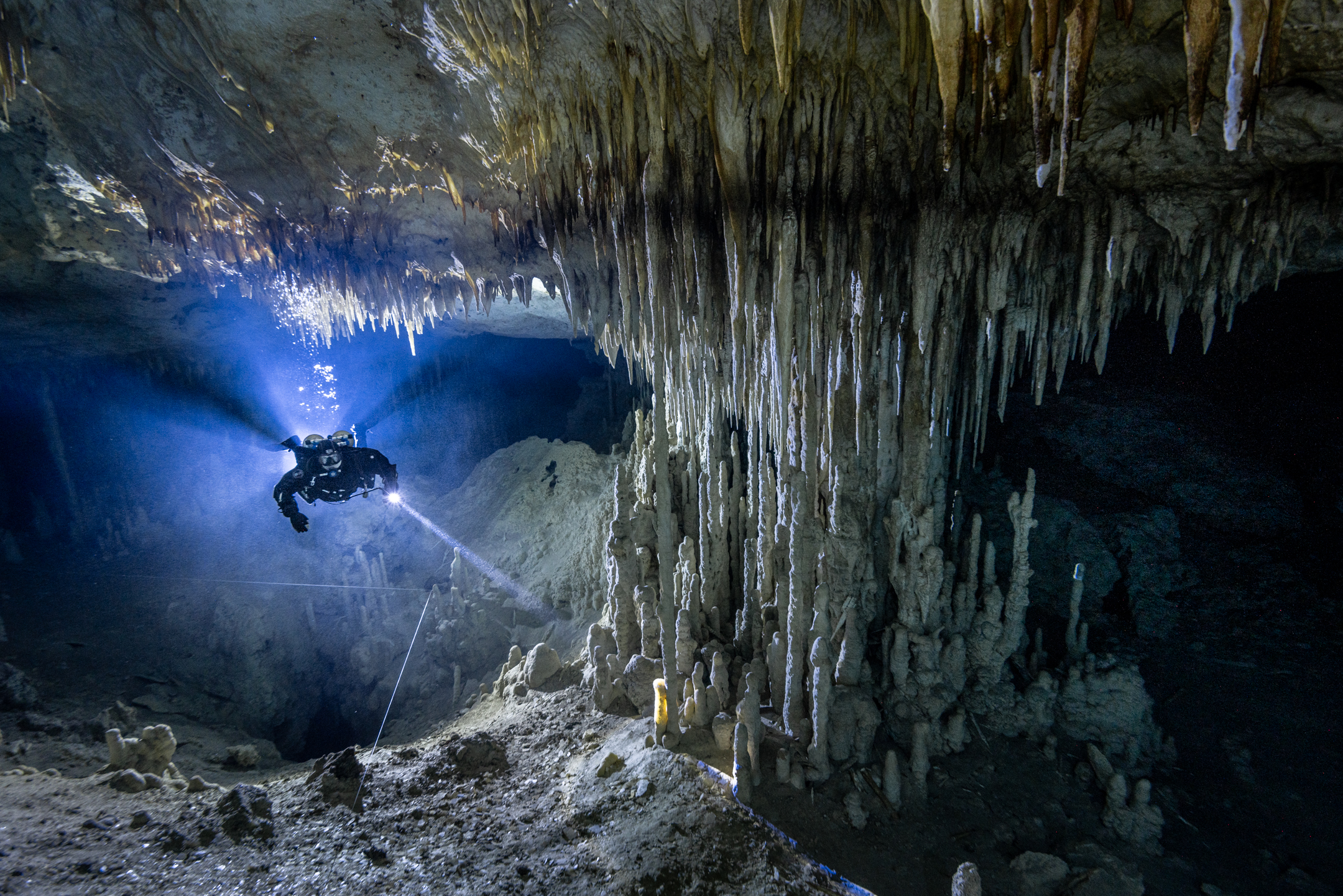
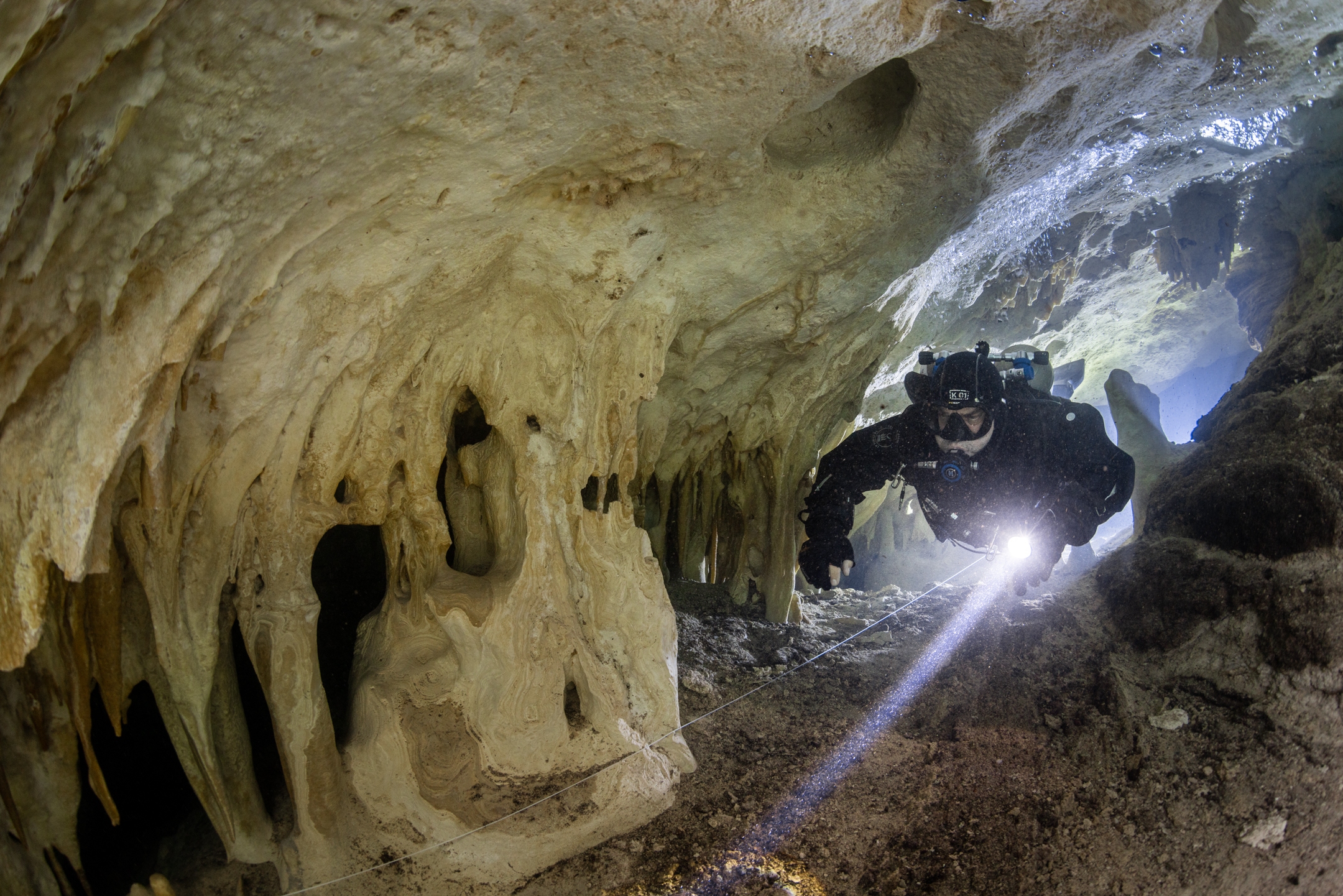
TDI Cavern Diver is the first formal step into overhead-environment training. The course develops the planning, guideline, buoyancy and problem-solving skills needed to explore suitable cavern zones while remaining within natural-light and no-decompression limits.
Training is deliberate and performance-based. The objective is not simply to complete a set of dives, but to build reliable habits that support sound judgement and future cave-development pathways.
Course at a Glance
- Entry-level TDI overhead-environment course
- Four cavern dives with at least 80 minutes total bottom time at two sites
- Daylight zone, no decompression and a maximum depth of 40 metres within qualification limits
Who This Course Is For
This course is designed for qualified open-water divers who want a structured introduction to overhead-environment procedures. It suits divers preparing for future cave training as well as those seeking stronger buoyancy, trim, guideline and team skills.
Cavern training remains within the daylight zone. It is not certification for cave penetration beyond natural light.
Prerequisites and Readiness
- Minimum age 18, or 15 with parental consent
- Open Water Diver certification or equivalent
- At least 25 logged dives
- Deep-diving certification or suitable experience when course dives are planned deeper than 18 metres
- Comfortable, stable buoyancy and basic emergency procedures
Entry requirements establish eligibility. Your starting skills and readiness are reviewed before overhead training begins.
How the Training Works
Training includes academic development, detailed briefings, land-based guideline practice and a minimum of four cavern dives at two suitable sites. The course is conducted over at least two days and includes at least six hours of classroom or briefing work.
Skills are developed progressively, with time for feedback, repetition and debriefing. Site conditions, diver readiness and demonstrated performance determine the pace of training.
Skills You Will Develop
- Buoyancy, trim and anti-silting propulsion
- Primary guideline and reel procedures
- Gas planning and team gas management
- Light, hand and touch communication
- Gas-sharing and light-failure procedures
- Following a guideline with simulated loss of visibility
- Stress awareness, environmental protection and disciplined dive planning
Certification Scope and Limits
Certification permits cavern diving only within the daylight zone and with a continuous guideline to the surface. Dives are no-decompression, do not pass restrictions, and remain within 61 linear metres of the surface.
Maximum depth is 40 metres, subject to the diver’s existing certification and experience. Gas penetration is limited to one-third of a single cylinder or one-sixth of doubles. Life-support equipment is not removed in the overhead environment.
Related Training Pathways
Where experience, performance and objectives support it, TDI Cavern may be combined with or followed by TDI Intro to Cave. Combined training still requires every Cavern skill and performance requirement to be completed before progressing beyond natural light.
There is no pressure to advance immediately. Consolidating cavern skills through appropriate experience is often the best next step.
Continue Your Cave Development
After certification, build experience gradually within Cavern limits. When buoyancy, guideline handling, gas management and team awareness are consistent, the next formal step is TDI Intro to Cave.
A Competence-Led Approach
- Understanding before memorisation
- Skill mastery rather than minimum performance
- Coaching shaped around the individual diver
Start a Conversation
Tell us about your certification, recent diving, logged experience and cave-training goals. We will help you assess readiness and plan an appropriate pathway.