CDAA Cave Diving
CDAA Cave Diver Course
Develop the planning, guideline, navigation and emergency skills required for appropriately rated Australian cave-diving environments.
Start a ConversationProgress into Cave-Rated Australian Sites
CDAA Cave Diver is the next formal step after CDAA Basic Cave. It develops the planning, guideline, navigation, team and emergency skills required for appropriately rated cave environments where darkness, silt and more complex passage characteristics demand disciplined decision-making.
Training builds on established overhead foundations and is tailored to the diver’s recent experience, equipment configuration and demonstrated readiness.
Course at a Glance
- Progression from CDAA Basic Cave to Cave-rated environments
- Minimum three days, eight hours of theory and six in-water sessions
- Four supervised dives at a minimum of two CDAA-rated Cave sites
Who This Course Is For
This course is for current CDAA Basic Cave divers who have consolidated their foundational skills and are ready for more demanding cave-rated environments. It suits divers who demonstrate reliable buoyancy, trim, propulsion, gas management, guideline awareness and team discipline.
The programme is a progression in capability—not simply access to more complex sites.
Prerequisites and Readiness
- Minimum age 18 and the applicable CDAA medical requirements
- CDAA Basic Cave, Cavern or Sinkhole certification, or an equivalent approved by the CDAA National Committee
- At least 20 Basic Cave dives at two different sites, totalling at least 10 hours; these dives may use any combination of open- or closed-circuit breathing systems
- Consistent buoyancy, trim, propulsion, guideline and emergency skills
- Equipment configuration suitable for the course and intended diving
For training on a rebreather, the diver must be certified on the unit to be used and have at least 50 post-course rebreather dives totalling 50 hours. Final eligibility is confirmed against current CDAA standards.
How the Training Works
CDAA Cave training is conducted over a minimum of three days and includes at least eight hours of theory, an equipment critique and relevant land drills.
A minimum of six in-water sessions is required: one controlled-water session, one skills-assessment session and four supervised site dives. The supervised dives are conducted at a minimum of two different CDAA-rated Cave sites and provide at least 120 minutes of accumulated underwater time.
The programme progressively develops line work, navigation, team procedures, gas management and responses to simulated problems. Assessment is continuous and performance-based.
Skills You Will Develop
- Precise buoyancy, trim and low-impact propulsion
- Guideline procedures and navigation appropriate to Cave-level training
- Gas planning, turn pressures and team gas management
- Light, hand and touch communication
- Gas-sharing and light-failure procedures
- Lost-line, lost-diver and visibility-loss problem solving
- Team awareness, situational judgement and disciplined dive planning
- Site access, conservation and low-impact cave-diving practice
Certification Scope and Limits
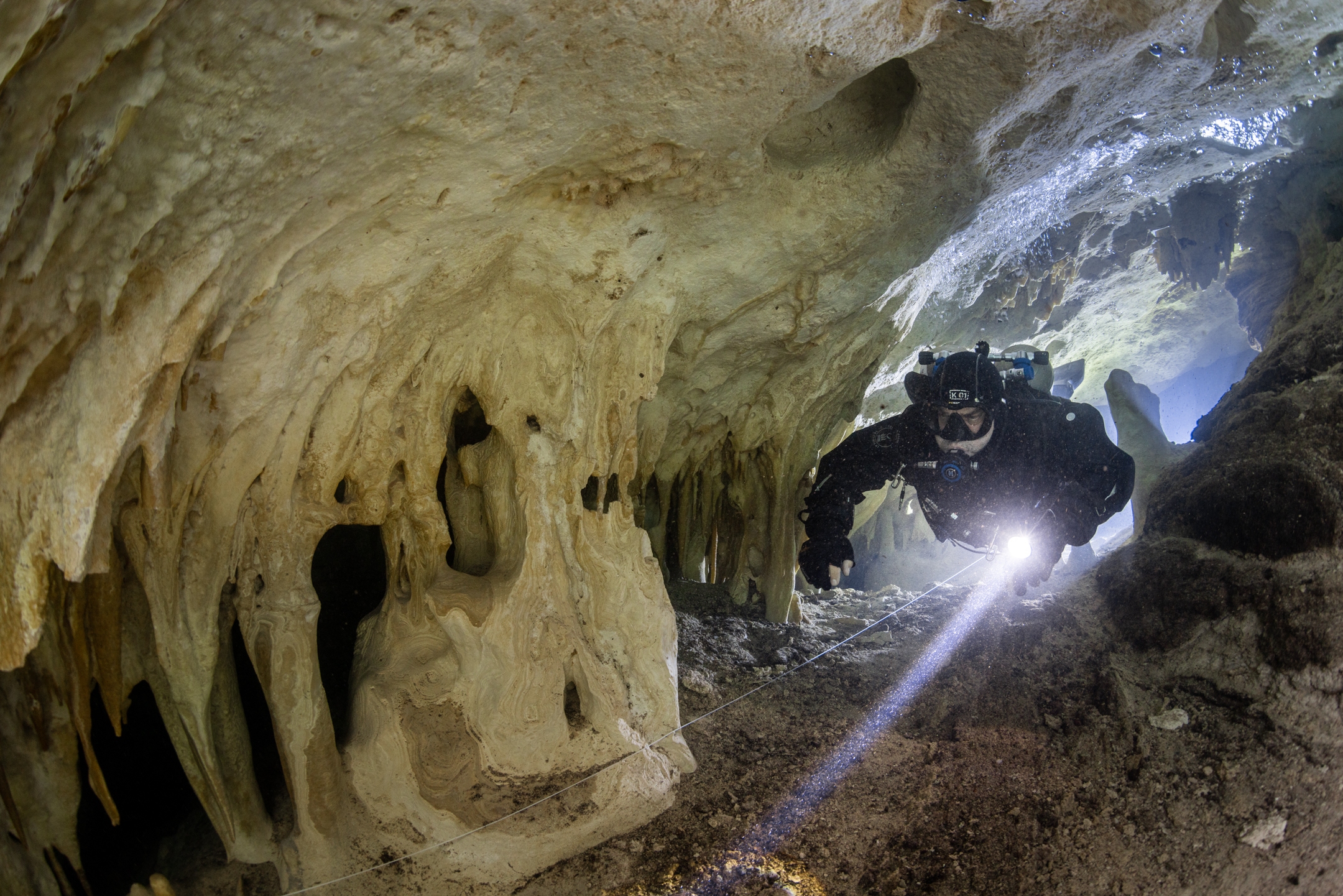
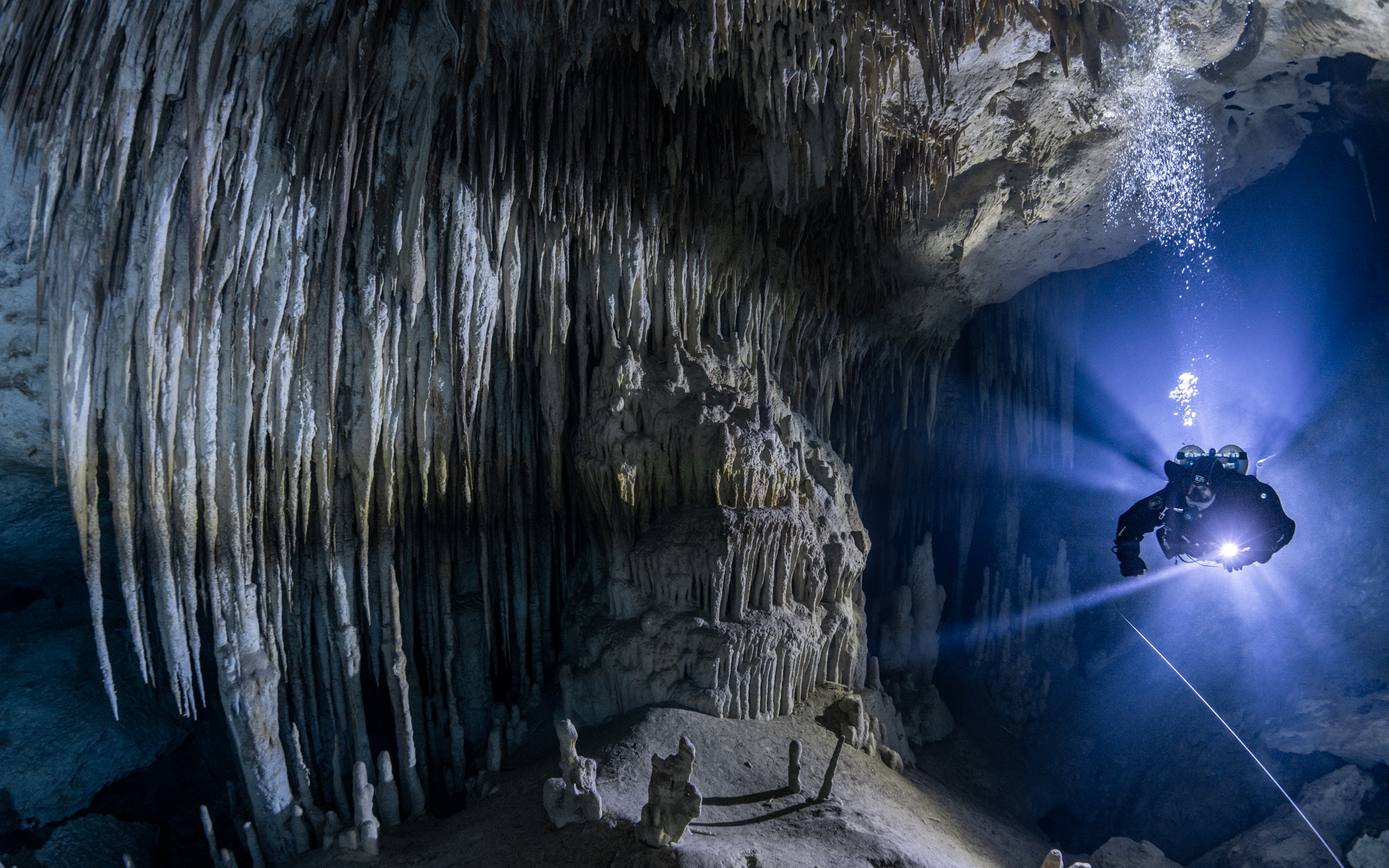
CDAA Cave certification applies to appropriately rated cave sites and recognises the additional demands of darkness zones, silt and passages that may be more restrictive than Basic Cave environments.
Every dive must remain within the diver’s certification, experience, equipment, site-access conditions and current CDAA standards. Certification is a foundation for responsible independent development—not a substitute for conservative planning or recent practice.
Crossovers and Related Pathways
Equivalent certifications and crossover applications are assessed under the current CDAA Cross Over Policy. Crossovers include CDAA orientation, the required pre-assessment and two site dives at the certification level sought.
TDI cave training may be available as a separate pathway where the diver enrols and meets the applicable TDI standards. CCR participants must be certified on their specific unit and meet the CDAA experience requirements described above.
Continue Your Cave Development
After certification, build experience progressively in suitable Cave-rated sites. Strong recent practice, disciplined team procedures and reliable problem solving provide the foundation for later Advanced Cave development where appropriate.
A Competence-Led Approach
- Understanding before memorisation
- Skill mastery rather than minimum performance
- Coaching shaped around the individual diver
Start a Conversation
Tell us about your current CDAA qualification, recent overhead diving, logged experience, equipment configuration and development goals. We will help you assess readiness and plan an appropriate pathway.