TDI Cave Diving
TDI Intro to Cave Diver Course
Progress beyond the daylight zone on a single continuous guideline while strengthening team awareness, gas planning and calm problem solving.
Start a ConversationProgress Beyond the Daylight Zone with Discipline
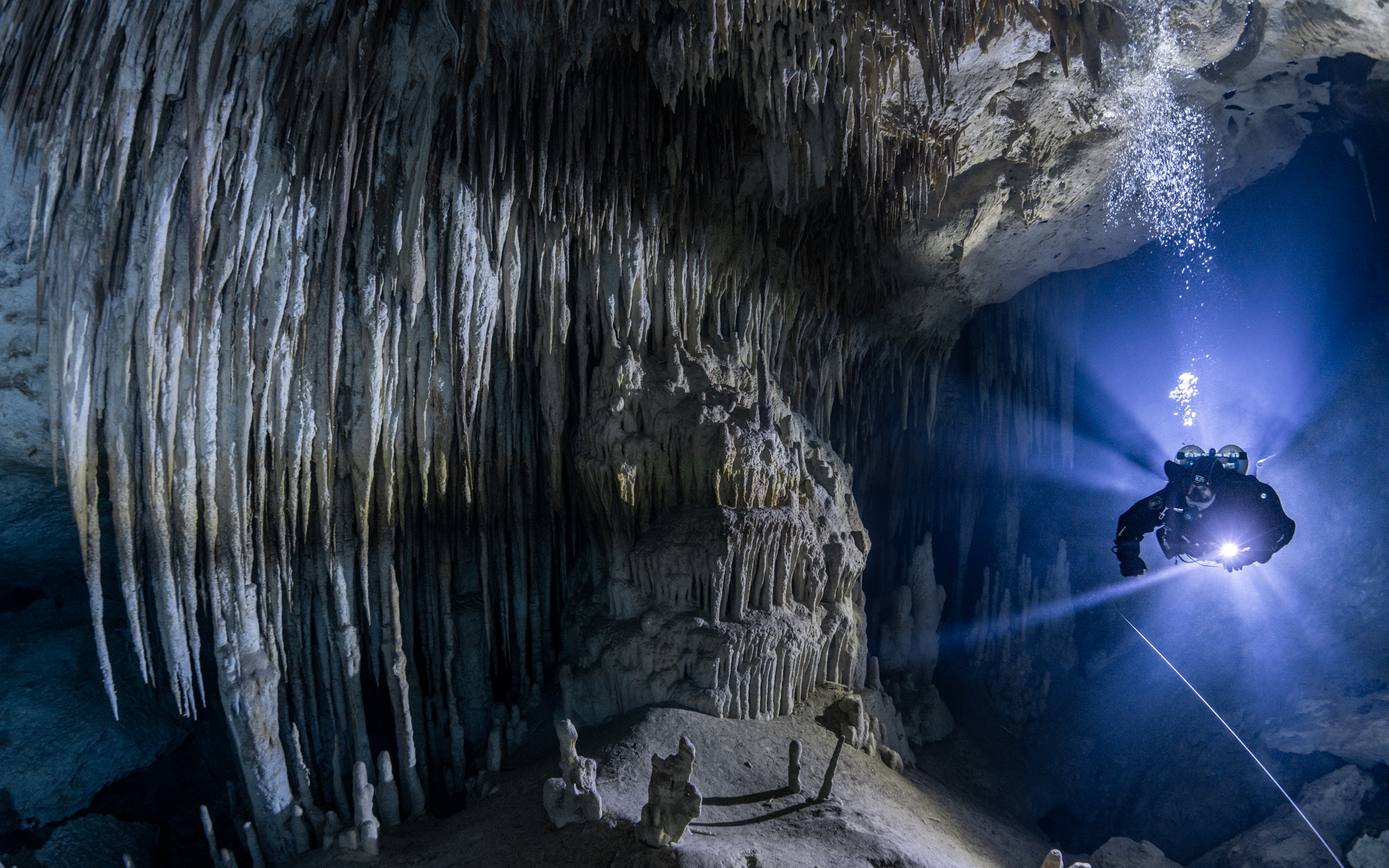
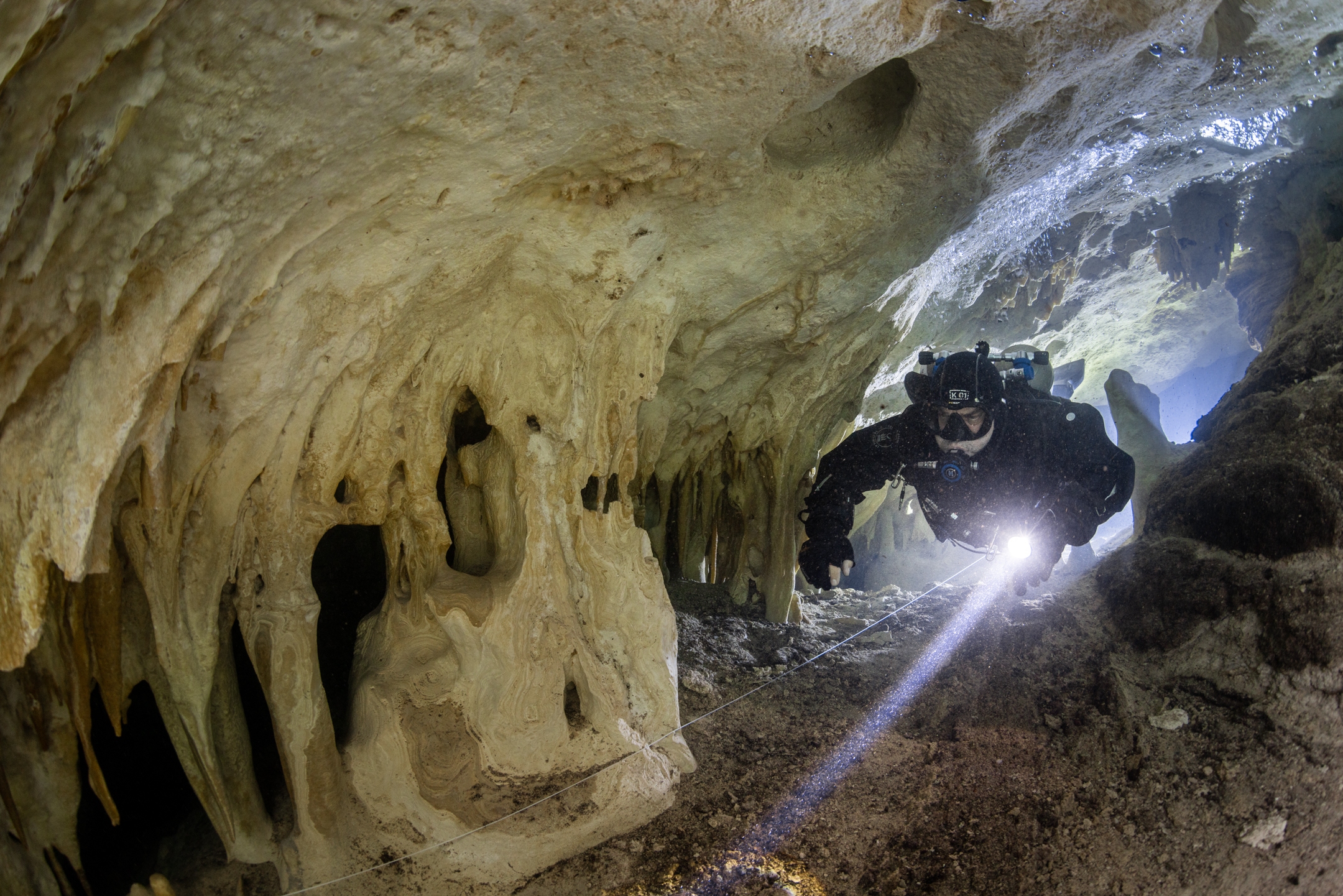
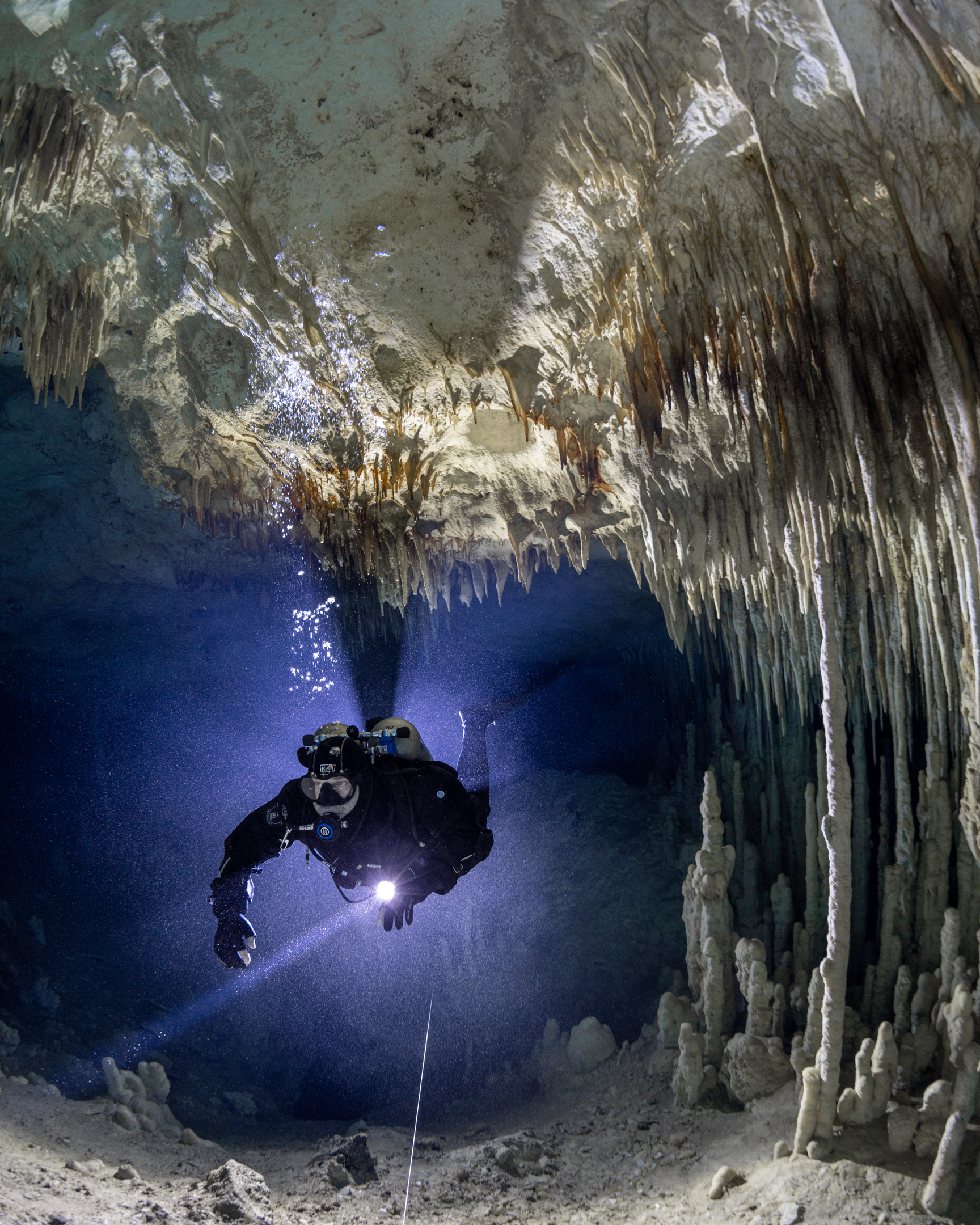
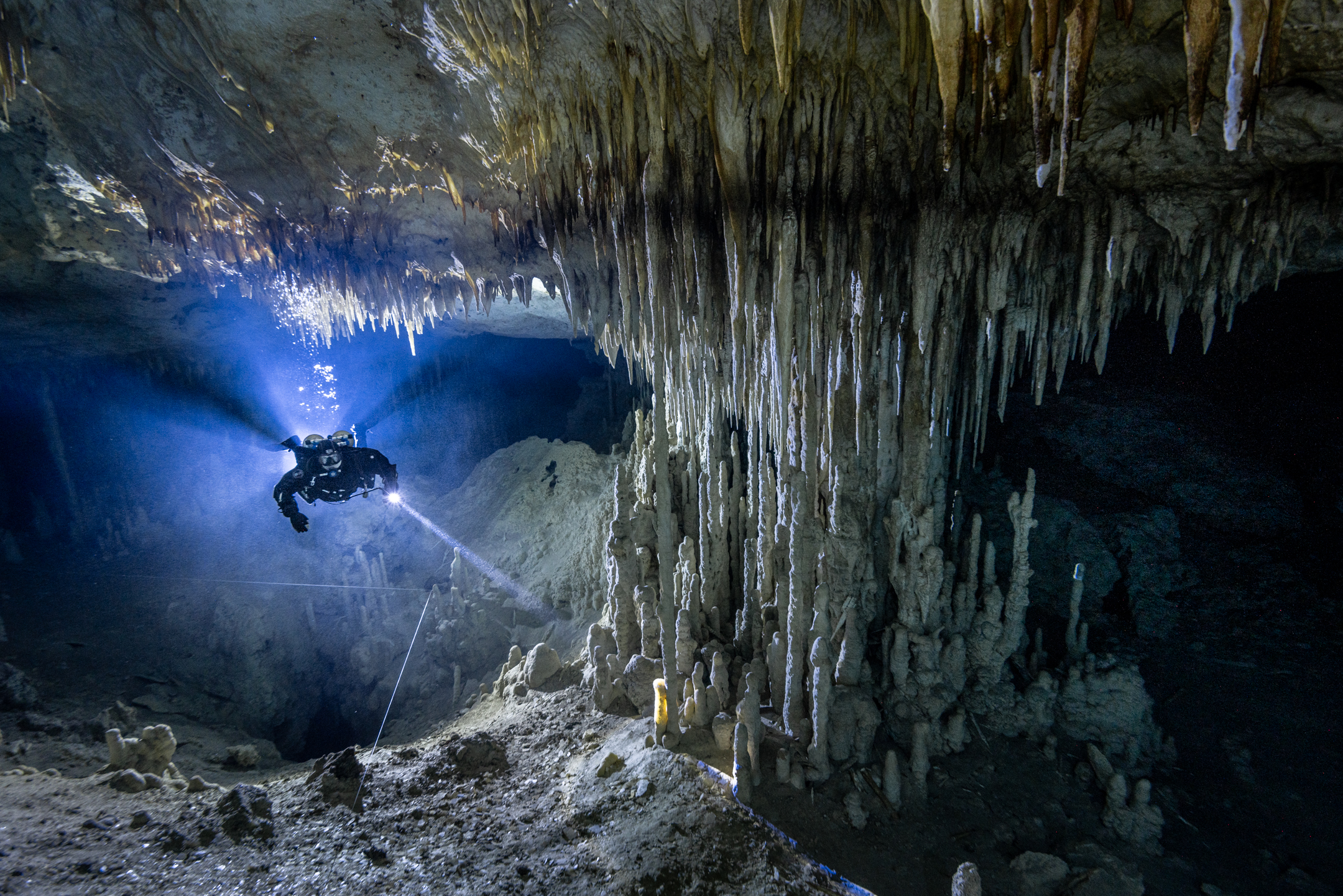
TDI Intro to Cave Diver is the second stage of the TDI cave-development pathway. It introduces limited cave penetration on a single continuous guideline and strengthens the buoyancy, gas-planning, communication and problem-solving skills required beyond natural light.
Training is conducted within clearly defined certification limits and is paced around demonstrated competence, judgement and environmental awareness.
Course at a Glance
- Second stage of the TDI cave-development pathway
- Four single-guideline cave dives with at least 100 minutes total bottom time at two sites
- No-decompression cave diving on a single continuous guideline to a maximum of 40 metres
Who This Course Is For
This course is for cavern-qualified divers who are ready to develop the discipline required for limited cave penetration beyond the daylight zone. It suits divers seeking a methodical progression rather than an accelerated route to advanced cave environments.
Intro to Cave is not full-cave certification. It establishes a controlled foundation that should be consolidated through suitable experience before further progression.
Prerequisites and Readiness
- Minimum age 18, or 15 with parental consent
- TDI Cavern Diver certification or an accepted equivalent, or current enrolment in a combined TDI Cavern and Intro to Cave programme
- Stable buoyancy, trim, propulsion and guideline skills suitable for an overhead environment
- Recent diving experience and the physical and psychological readiness required for cave training
Eligibility does not guarantee certification. Readiness is reviewed before and throughout the programme.
How the Training Works
The programme includes academic development, land drills, detailed briefings and a minimum of four single-guideline cave dives at two suitable sites. Training is conducted over at least two days, with at least four hours of classroom or briefing work and at least 100 minutes of total bottom time.
Each session builds progressively. Feedback and repetition continue until skills are consistent or a clear development plan is agreed.
Skills You Will Develop
- Precise buoyancy, trim and anti-silting propulsion
- Primary guideline placement and marker use
- Gas planning and team gas management
- Light, hand and touch communication
- Gas-sharing and light-failure procedures
- Lost-line and lost-diver procedures
- Guideline following in simulated zero visibility
- Stress management, cave conservation and disciplined dive planning
Certification Scope and Limits
Certification is limited to no-decompression cave diving on a single continuous guideline. Dives do not pass restrictions and must allow two divers to swim side by side. Maximum depth is 40 metres, subject to existing qualification and experience.
Gas penetration is limited to one-third of a single cylinder or one-sixth of doubles. Proper cave-diving equipment is required, and life-support equipment is not removed in the overhead environment.
Combined and Related Training
TDI Cavern and Intro to Cave may be combined when the diver’s experience, preparation and performance support that pathway. A combined programme requires at least three days, eight dives and 180 minutes of total bottom time, with all Cavern skills completed before leaving natural light.
Equivalent certifications and crossover options are assessed against current TDI standards.
Continue Your Cave Development
After certification, consolidate your skills through conservative dives within Intro to Cave limits. When guideline work, awareness, gas management and team procedures are consistently reliable, discuss the appropriate pathway toward TDI Cave or Full Cave training.
A Competence-Led Approach
- Understanding before memorisation
- Skill mastery rather than minimum performance
- Coaching shaped around the individual diver
Start a Conversation
Tell us about your current overhead certification, recent diving, logged cave experience and development goals. We will help you assess readiness and plan an appropriate next step.