SDI Recreational Diving
SDI Deep Diver Course in Melbourne
Learn to plan and conduct deeper recreational dives with disciplined gas management, clear limits and greater awareness of how depth changes risk.
Start a ConversationDepth changes the plan
Go Deeper with More Discipline
Beyond 18 metres / 60 feet, gas is consumed faster, no-decompression time becomes shorter and small delays can carry greater consequences. Deep diving therefore depends on deliberate planning and continuous awareness—not simply descending further.
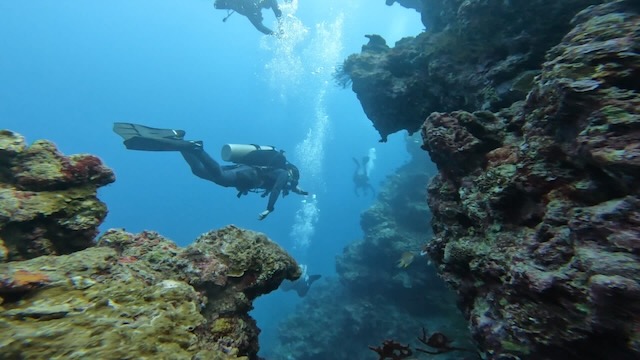
The SDI Deep Diver course develops the knowledge and practical habits required for recreational dives to a maximum of 40 metres / 130 feet. Training remains within no-decompression limits and is adapted to the diver, site and conditions.
Course at a Glance
Who This Course Is For
- Certified divers who want structured training beyond the normal Open Water depth range.
- Divers interested in deeper reefs, walls or non-penetration wreck sites within recreational limits.
- Divers who want stronger gas, depth, time and ascent planning habits.
- Divers building an experience base for advanced recreational or future technical-diving pathways.
Prerequisites and Readiness
- SDI Open Water Scuba Diver, SDI Junior Open Water Scuba Diver, or an equivalent recognised certification.
- Minimum age 18, or age 10 with written parental consent.
- Divers aged 10 through 14 may not exceed 21 metres / 70 feet during this course.
- Complete the required SDI administrative and medical documentation before in-water training.
- Demonstrate recent buoyancy, gas-monitoring, buddy and ascent skills appropriate for the planned depth and conditions.
How the Two Dives Work
Build the Deep-Dive Plan
Check instruments and equipment, become familiar with the site, descend to the agreed depth without exceeding the plan, monitor depth, time and gas, assess the effects of narcosis, and ascend to a safety stop. The maximum depth is 30 metres / 100 feet.
Apply and Consolidate
Plan and execute a second deeper dive while maintaining the agreed depth, gas and time limits. Complete an instructor-assigned simulated problem, remain within no-decompression limits and finish with a controlled ascent and safety stop. The maximum depth is 40 metres / 130 feet.
Think Beyond the Bottom
Brief and debrief the complete dive: surface interval, no-decompression time, gas reserves, changing conditions, team status, ascent, emergency actions and the suitability of the plan.
The listed depths are maximum course limits—not required targets. Training depth may be reduced because of age, certification, visibility, temperature, current, site access, diver readiness or available gas.
Skills and Knowledge You Will Develop
Continue Your Development
Deep-diving training can support broader recreational experience or reveal areas that should be strengthened before pursuing technical training.
Frequently Asked Questions
How many dives are required?
The current SDI standard requires two open-water dives, each with a complete instructor briefing and debriefing.
Will both dives be to 40 metres?
No. The first dive may not exceed 30 metres / 100 feet and the second may not exceed 40 metres / 130 feet. Actual depths are selected for the diver, conditions, site and training objectives.
What is the limit for junior divers?
Divers aged 10 through 14 may not exceed 21 metres / 70 feet. All junior certification and supervision requirements continue to apply.
Does this course include decompression diving?
No. The SDI Deep Diver course is conducted within no-decompression limits. Planned decompression requires separate technical-diving training, equipment and experience.
Do I need special equipment?
You need suitable open-water equipment, including your own personal dive computer. The plan and site may also justify additional or redundant gas, signalling and ascent equipment, which will be discussed before training.
Does certification mean I should immediately dive to 40 metres?
No. Forty metres is the adult certification maximum, not a target for every dive. Depth should increase gradually and always reflect recent experience, conditions, team capability and available gas.
The Blue Water Ascent approach
Depth Is Managed, Not Chased
We use deeper dives to develop planning, awareness and judgement. Progress is based on demonstrated control and a conservative plan, with the freedom to reduce depth whenever the diver or conditions require it.
Start a Conversation About Deep Diver Training