SDI Recreational Diving
SDI Advanced Buoyancy Diver Course in Melbourne
Develop quieter, more efficient diving through precise weighting, balanced equipment and calm, repeatable buoyancy control.
Start a ConversationControl before complexity
Build the Foundation for Better Diving
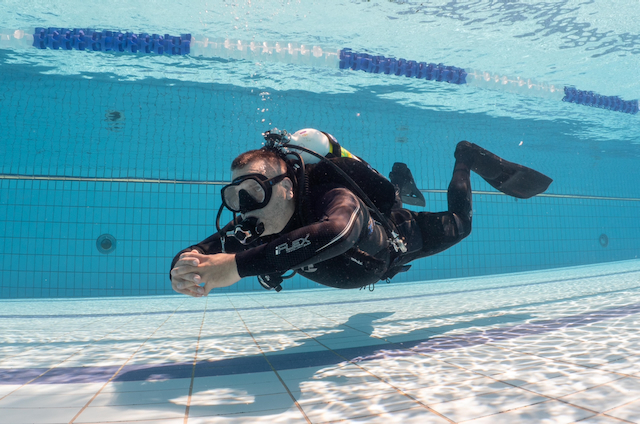
Buoyancy affects nearly everything you do underwater: comfort, awareness, gas use, environmental impact and the ability to perform other skills calmly. This course examines the factors that influence buoyancy and turns them into practical, repeatable control.
Rather than chasing a single ideal posture, we help you understand weighting, balance and equipment choices so you can maintain an appropriate position and depth for the task, environment and equipment you are using.
Course at a Glance
Who This Course Is For
- Certified divers who use more weight than necessary or struggle to hold a depth.
- Divers who want a stable horizontal position and more efficient movement through the water.
- Divers preparing for photography, dry-suit, technical, wreck or overhead-environment training.
- Any diver who wants to reduce effort and environmental contact through better control.
Prerequisites and Readiness
- SDI Open Water Scuba Diver, SDI Junior Open Water Scuba Diver, or an equivalent recognised certification.
- Minimum age 18, or age 10 with written parental consent.
- Complete the required SDI administrative and medical documentation before in-water training.
- Bring the equipment configuration normally used for diving so weighting, balance and streamlining can be assessed meaningfully.
- Training is adapted to the diver, while certification requires consistent completion of all prescribed skills.
How Training Works
Assess and Adjust
Evaluate weighting at different cylinder pressures, experience the effects of being under- and overweighted, refine balance, complete a controlled descent and practise stationary hovering and neutral skills.
Refine and Repeat
Repeat the buoyancy check with a full cylinder, refine breath and buoyancy-device control, practise close-to-bottom movement without contact, and complete a controlled ascent with a stable safety stop.
Feedback and Debrief
Use observation, coaching and debriefing to understand what changed. Record the final weighting and identify the adjustments that can be transferred to future dives.
The dives may be completed in confined or open water. Training location, conditions and group size are selected to provide sufficient visibility, control and time for individual coaching.
Skills and Knowledge You Will Develop
Continue Your Development
Once buoyancy and trim are consistent, the next course should match the environments you want to explore and the experience you have built.
Frequently Asked Questions
How many dives are required?
The current SDI standard requires two dives, each supported by a complete briefing and debriefing.
Can the course be completed in a pool?
Yes. SDI permits the two dives to be completed in confined water or open water. The environment is selected to support safe, focused learning.
Do I need to be an advanced diver?
No. An SDI Open Water Scuba Diver, Junior Open Water Scuba Diver, or equivalent certification meets the certification prerequisite.
Will better buoyancy reduce my gas consumption?
Better weighting, trim and movement can reduce unnecessary effort, which may improve gas use. Individual breathing rate, fitness, conditions and experience also affect consumption.
Do I need different equipment?
Usually not. Training with your normal configuration is valuable because it allows us to assess weighting, balance, hose routing and accessory placement. Any recommended changes will be explained and tested.
Is certification guaranteed after two dives?
No. Certification is performance-based. The required knowledge and in-water skills must be demonstrated consistently.
The Blue Water Ascent approach
Small Adjustments. Lasting Control.
We combine careful observation with practical coaching so you understand both the result and the reason behind it. The goal is calm, adaptable buoyancy—not a performance that works only during the course.
Start a Conversation About Buoyancy Training