SDI Recreational Diving
SDI Night and Limited Visibility Diver Course in Melbourne
Develop the equipment skills, awareness and team procedures needed to manage darkness and reduced visibility with calm, deliberate control.
Start a ConversationAwareness beyond daylight
See Less. Notice More.
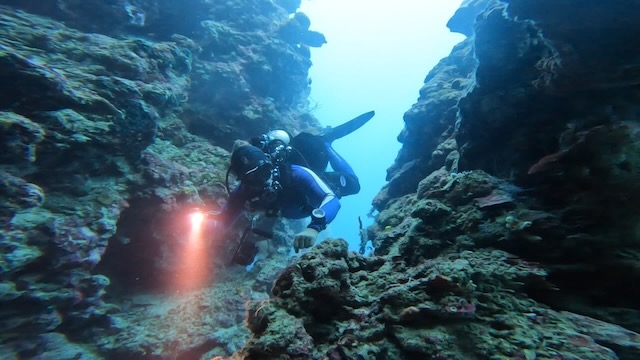
Night and limited-visibility dives change the information available to you. Light beams narrow your field of view, familiar sites look different and maintaining team awareness requires deliberate communication and positioning.
This course develops practical procedures for those changes. You will learn to use lights effectively, maintain contact, navigate, control buoyancy without broad visual references and respond when orientation, visibility or equipment is compromised.
Course at a Glance
Who This Course Is For
- Certified divers interested in Melbourne’s marine life and underwater environment after dark.
- Divers who want better procedures for reduced-visibility conditions.
- Divers seeking greater confidence with lights, team communication and navigation.
- Divers building experience for advanced recreational pathways where low-light awareness is valuable.
Prerequisites and Readiness
- SDI Open Water Scuba Diver, SDI Junior Open Water Scuba Diver, or an equivalent recognised certification.
- Minimum age 18, or age 10 with written parental consent.
- Complete the required SDI administrative and medical documentation before in-water training.
- Bring suitable exposure protection, a personal dive computer, compass, primary light, backup light and audible surface signalling device.
- Demonstrate recent foundational buoyancy, buddy and ascent skills appropriate for the planned site and conditions.
How the Two Dives Work
Light, Contact and Control
Plan and enter safely, remain submerged for at least 20 minutes, change direction while maintaining navigation, use lights and instruments correctly, maintain buddy contact and complete a controlled ascent and debrief.
Orientation and Navigation
Plan the dive, complete a two-minute swim without a compass, surface and reorient, then descend and navigate using the procedures developed during training.
Contingency Procedures
Prepare for light failure, disorientation, buddy separation and disabled-diver scenarios, with clear limits and agreed communication before entering the water.
Each plan includes the site, entry and exit, surface interval, no-decompression limits, gas, environmental conditions, team communication and emergency procedures. The instructor may reduce depth, duration or group size as conditions require.
Skills and Knowledge You Will Develop
Continue Your Development
Low-light awareness complements buoyancy, navigation and broader recreational experience. We can help you select the next step that matches your diving goals.
Frequently Asked Questions
How many dives are required?
The current SDI standard requires two open-water dives, each with a complete instructor briefing and debriefing.
What counts as a night or limited-visibility dive?
SDI defines it as a dive requiring a light to enhance visibility. The course procedures apply to darkness and other reduced-visibility environments.
What lights do I need?
The SDI equipment standard requires a primary and backup light. Equipment must be checked before the dive, suitable for the conditions and positioned so it can be managed without compromising other controls.
Is night diving safe?
Night and limited-visibility diving introduces additional hazards, including disorientation, separation and light failure. Appropriate training, equipment, conservative planning and disciplined team procedures help manage those risks.
How long are the training dives?
The first open-water dive includes at least 20 minutes submerged. Actual dive duration is governed by the plan, conditions, gas, no-decompression limits and diver readiness.
Does this certification extend my depth limit?
No. All dives remain within the diver’s existing certification, age and supervision limits, and may be made shallower when conditions or readiness require it.
The Blue Water Ascent approach
Calm Procedures When Visual Cues Change
We coach preparation, team awareness and repeatable responses—not confidence based on ideal conditions. The objective is to recognise changing circumstances early and make conservative decisions as a team.
Start a Conversation About Night Diving